Due to the long travel form Sigiriya to Hambantota yesterday we started the day with a late breakfast at 10am, and left our new hotel a hour later. The first stop of the day were to the Mattala Rajapaksa International Airport (MRIA). This airport were built in 2013 during the Rajapaksa government, and even twelve years later the airport is neither finished or generating income for Sri Lanka. MIRA is funded by loans from China, and as of now the airport have two bridges, which they are planning on expanding to fourteen. Most of the fligths are to and from Russia, contributing to russians being the second highest amount of turists in Sri Lanka. During the tourist season the airport only have three flights a day, but during off-season it can decrease to as little as one fligth a week. Even with this low amount of fligths are there still 450 workers at the airport every day. This is creating many job opportunities, but also huge losses in order to pay the workers wages. The losses also affect the local community as russian travel companies plan entire traveles using hotels and areas opperated by russian companies. This results in the money going back to Russia, instead of the local community. As the secound international airport of Sri Lanka MRIA had a vision of being a contribution to the economic development in the Hambantota area, but ended up being more of a bruden.
Next we visited the Sooriyawewa International Cricket Stadium, also known under the name of Mahinde Rajapaksa International Cricket Stadium. The stadium were built for the 2011 Cricket World Cup, and hosted two games. During matches it has the capacity to host around 40.000 spectators. Since the opening of the stadium there have been hosted 16 international games, and the last were in 2019. The stadium were, like the MRIA, funded by Chinese loans, and costed lots of money. Even with the funds put into the stadium were a match between Australia and Sri Lanka scheduled for February 2025 moved to Colombo, due to the lacking infrastructure in the Hambantota area. There is a maintenance team upkeeping the gass of the stadium, however there are still several renevations needing to be made in order for the stadium to be ready for a new match.
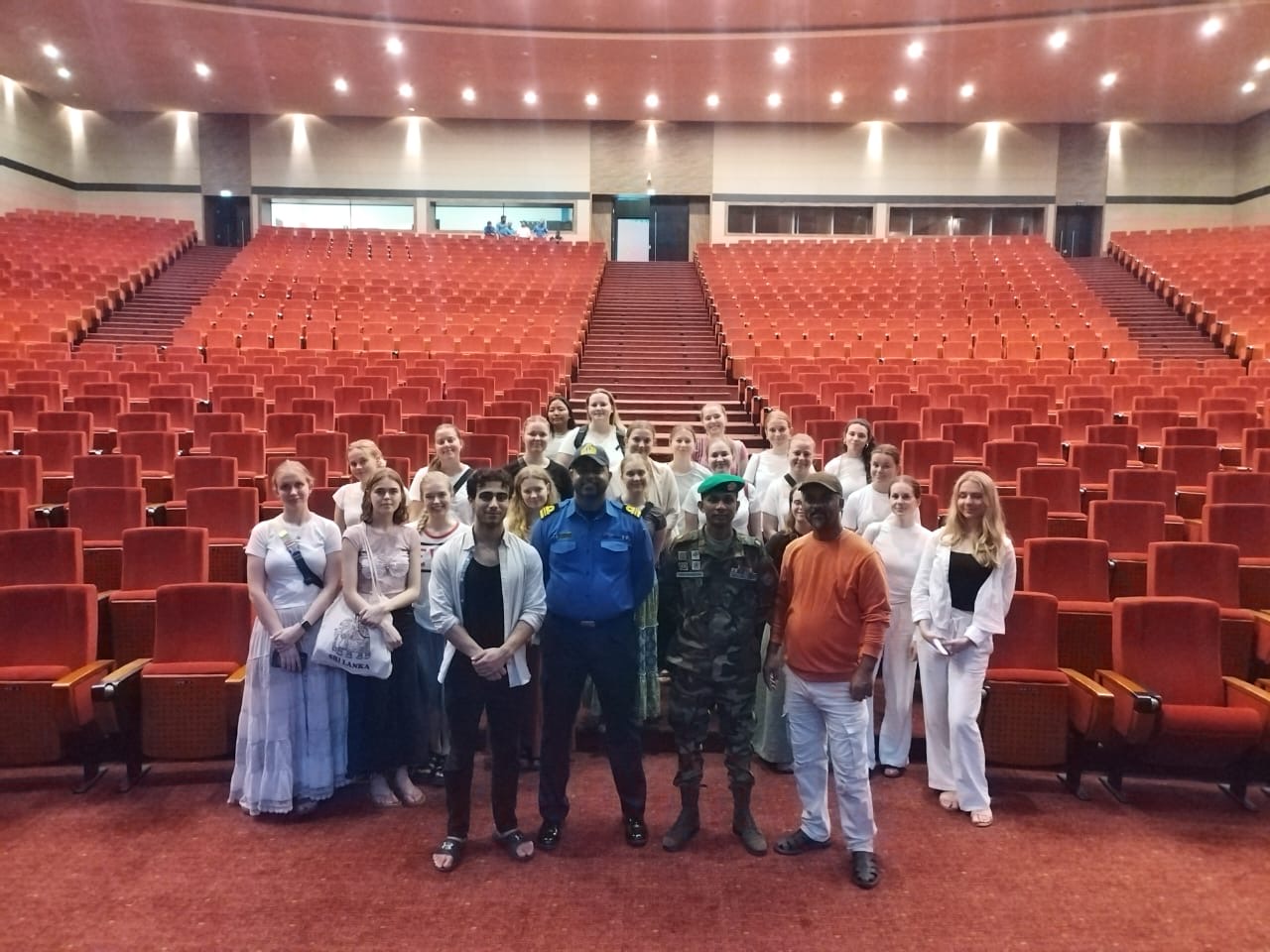
After the stadium were ate lunch, before we headed to the last stop of the day, Magam Ruhunupura International Convention Centre (MRICC). This center were built from 2008 to 2013, and can be used for conferences and weddings. The huge venue have five entrances, two helipads, an outdoor theatre, two restaurants and a main hall. MRICC were funded by the Sri Lankan government, and costed 35 million USD. In addition the main hall were a gift from South Korea and costed 6 million USD. In order to earn back the money used to build the centre is the rent high costs, for example to rent the main hall it costs 1 million rupees for just 6 hours. However the high costs also maked the venue unavailable for many possible costumers. The plan further is to make a website and market the venue in order to start generating profits. In addition they also wants to reduce costs in order to make their accommodations more accessible to consumers. One of the changes they wish to make is powering the center through solar power in order to lower energy costs.
All of the installations we visited today were part of the development plan in the Hambantota area under the Rajapaksa government. However due to the lack of national policies, and governments working against each other, have these projects been neglected. These development efforts are also a great example of how FDIs are negatively affecting Sri Lanka’s development process.
After this we returned to the hotel were we saw wild elephants, which was very exciting! Then we ate dinner at the hotel, and most of us are preparing for an early morning tomorrow. This has been a very insightful day, and we look forward to the homestay in order to learn how these failed development projects have affected the local community in Hambantota.
Group 5 - Ada, Katrine, Lea & Anja