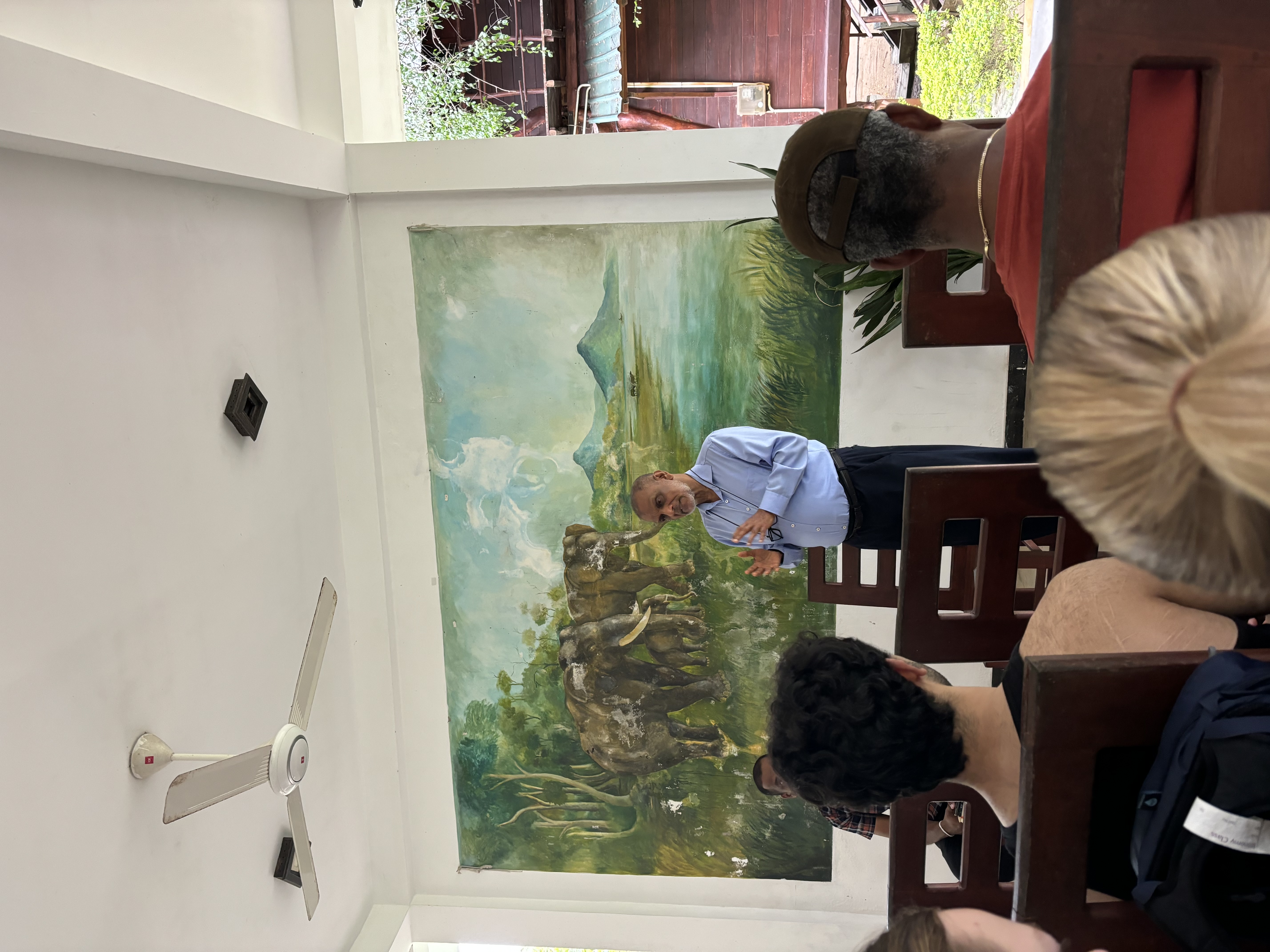
This morning at 9:00 am, we met with Mr. Azmi Thassim, the Sri Lankan ambassador to Saudi Arabia from 2015 to 2019 and a member of the Hambantota Chamber of Commerce since its inception. The Hambantota Chamber of Commerce is the first district-level chamber in the country. He was the first president of the chamber in the 1990s, and since then there have been 15 presidents. Thassim explained the role of the Chamber of Commerce as lobbying for development of Hambantota. To do this, they work to support low to medium level businesspeople, while facing difficulty because Sri Lanka does not mandate that businesses must be affiliated with a chamber of commerce. The chamber supports businesses to access marketing tools, find skilled workers, and more. The chamber also works to support the women’s chamber, as they often face gender barriers, by creating a comfortable environment, and the youth community while they prepare to enter the business space. To try to help us better understand the environment in which the chamber works, Thassim explained the four different sectors in Sri Lankan Government: (1) Local government, (2) Provincial Government, (3) Parliamentary Government, and (4) Presidential Office. Thaissum expects there to be changes to this Sri Lankan government in the next 1-2 years, and advices that the new government must be careful in accepting loans. In regard to the Hambantota projects, Thassim stresses that the Hambantota Chamber of Commerce had minimal involvement and were not given time to discuss the changes. In his previous role as Ambassador, Thassim experienced a similar situation, he was given the power to inform the government of issues but not the power to make meaningful change. In his position at the Hambantota Chamber of Commerce, he works to be good voice for the businesspeople and the best representative of the private sector. When wrapping up our discussion, Thassim stressed the importance of maintaining institutional relationships rather than interpersonal ones, as he hopes to see the collaboration between the University of Agder and the Hambantota Chamber of Commerce continue past the collaboration between himself and Ajith.
Before lunch we visited the largest women-based NGO in Sri Lanka, the Women Development Federation. It was founded in 1989 and has since then tried to help empower families through the women of the households. The goal of the organization is «To become the greatest women’s organization in South Asia providing microfinance and social advancment services to empower distressed families». They do this by helping families economically, spiritually, socially and environmentally. Here are some examples of that: - Helping families economically by giving out loans for growing their businesses. - Different youth programs to help the younger generation utilize their time and potential better. - Social mobilization by informing people about why and how the organization can be helpful for them.
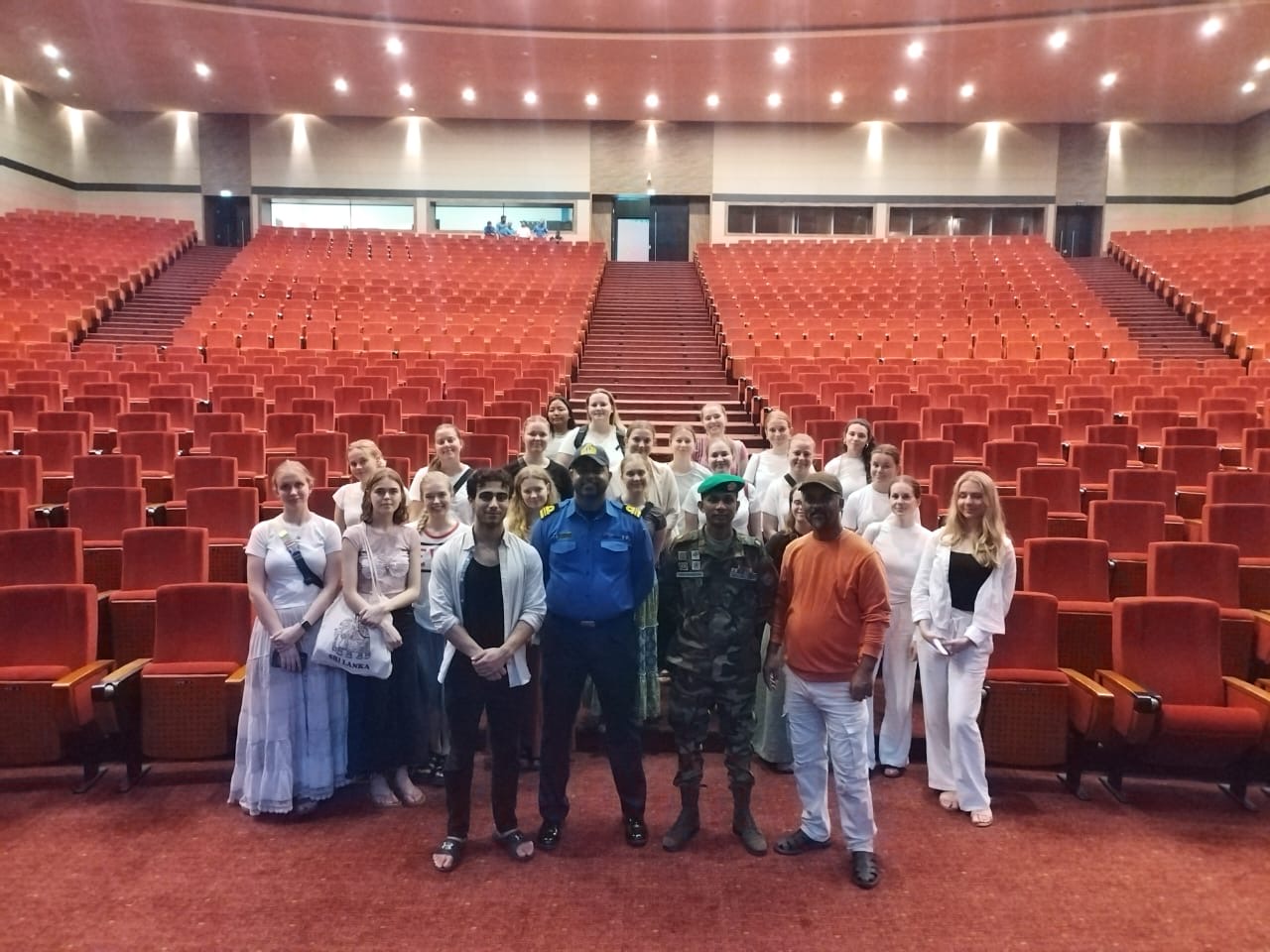
The focus of the organization is mainly on families that fall below the poverty line. Everyone can apply for membership but they have to buy 500 shares to begin with followed by a monthly fee of 50 rupees, which covers insurance. For every recognized village there are five women (mothers) who represents them and speak of the troubles the families are facing, while one of them, the president, takes it further as they are a part of the organization. Through all of the different levels in the organization, no men are involved. The money that are given to distressed families are given to the women as money handled by men can often be used to buy alcohol and satisfying addiction. They also help women with savings and loans and simplifying the economic processes they have to go through, especially if they have a business. When it comes to giving out loans to business-owners, the loan-takers first have to get a smaller loan, around 35,000 rupees and show their progress or success to be able to apply for a bigger one (max 500,000 rupees). Also, 5% of interest is given back to the loan-takers as a bonus for paying back the loan on time. We have percived this as a very effective, helpful and sustainable organization and are impressed by their work. They have helped families for many years now and we believe that they will keep helping families for years to come. The visit was completed with some local snacks, tea and a group photo.
We got the rest of the evening free, to relax and prepare for the homestays that will begin tomorrow. We will be staying with a host family for a couple of days where we will be doing interviews for our research topics, and experience the life of the locals.
Group 1 - Kaja, Andrea, Lorelei and Julia