January 22nd, day 17

January 22nd, day 17

Due to the long travel form Sigiriya to Hambantota yesterday we started the day with a late breakfast at 10am, and left our new hotel a hour later. The first stop of the day were to the Mattala Rajapaksa International Airport (MRIA). This airport were built in 2013 during the Rajapaksa government, and even twelve years later the airport is neither finished or generating income for Sri Lanka. MIRA is funded by loans from China, and as of now the airport have two bridges, which they are planning on expanding to fourteen. Most of the fligths are to and from Russia, contributing to russians being the second highest amount of turists in Sri Lanka. During the tourist season the airport only have three flights a day, but during off-season it can decrease to as little as one fligth a week. Even with this low amount of fligths are there still 450 workers at the airport every day. This is creating many job opportunities, but also huge losses in order to pay the workers wages. The losses also affect the local community as russian travel companies plan entire traveles using hotels and areas opperated by russian companies. This results in the money going back to Russia, instead of the local community. As the secound international airport of Sri Lanka MRIA had a vision of being a contribution to the economic development in the Hambantota area, but ended up being more of a bruden.

Next we visited the Sooriyawewa International Cricket Stadium, also known under the name of Mahinde Rajapaksa International Cricket Stadium. The stadium were built for the 2011 Cricket World Cup, and hosted two games. During matches it has the capacity to host around 40.000 spectators. Since the opening of the stadium there have been hosted 16 international games, and the last were in 2019. The stadium were, like the MRIA, funded by Chinese loans, and costed lots of money. Even with the funds put into the stadium were a match between Australia and Sri Lanka scheduled for February 2025 moved to Colombo, due to the lacking infrastructure in the Hambantota area. There is a maintenance team upkeeping the gass of the stadium, however there are still several renevations needing to be made in order for the stadium to be ready for a new match.

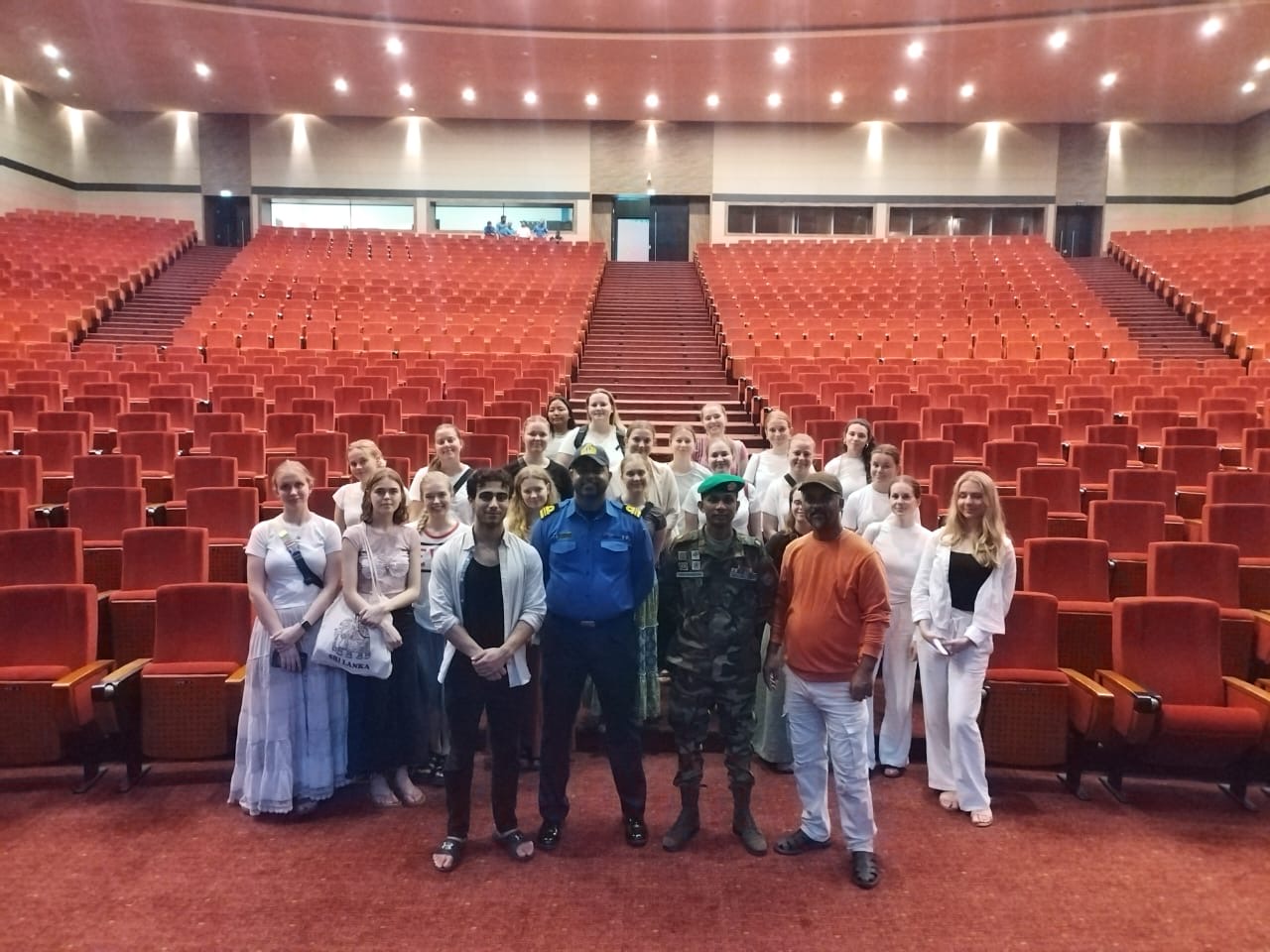
After the stadium were ate lunch, before we headed to the last stop of the day, Magam Ruhunupura International Convention Centre (MRICC). This center were built from 2008 to 2013, and can be used for conferences and weddings. The huge venue have five entrances, two helipads, an outdoor theatre, two restaurants and a main hall. MRICC were funded by the Sri Lankan government, and costed 35 million USD. In addition the main hall were a gift from South Korea and costed 6 million USD. In order to earn back the money used to build the centre is the rent high costs, for example to rent the main hall it costs 1 million rupees for just 6 hours. However the high costs also maked the venue unavailable for many possible costumers. The plan further is to make a website and market the venue in order to start generating profits. In addition they also wants to reduce costs in order to make their accommodations more accessible to consumers. One of the changes they wish to make is powering the center through solar power in order to lower energy costs.

All of the installations we visited today were part of the development plan in the Hambantota area under the Rajapaksa government. However due to the lack of national policies, and governments working against each other, have these projects been neglected. These development efforts are also a great example of how FDIs are negatively affecting Sri Lanka’s development process.

After this we returned to the hotel were we saw wild elephants, which was very exciting! Then we ate dinner at the hotel, and most of us are preparing for an early morning tomorrow. This has been a very insightful day, and we look forward to the homestay in order to learn how these failed development projects have affected the local community in Hambantota.

Group 5 - Ada, Katrine, Lea & Anja
Fourth day in Sri Lanka, January 9th

Fourth day in Sri Lanka, January 9th

![enter image description here](https://fcsl2025.fohss.lk/content/images/20250109225022-2222.JPG)

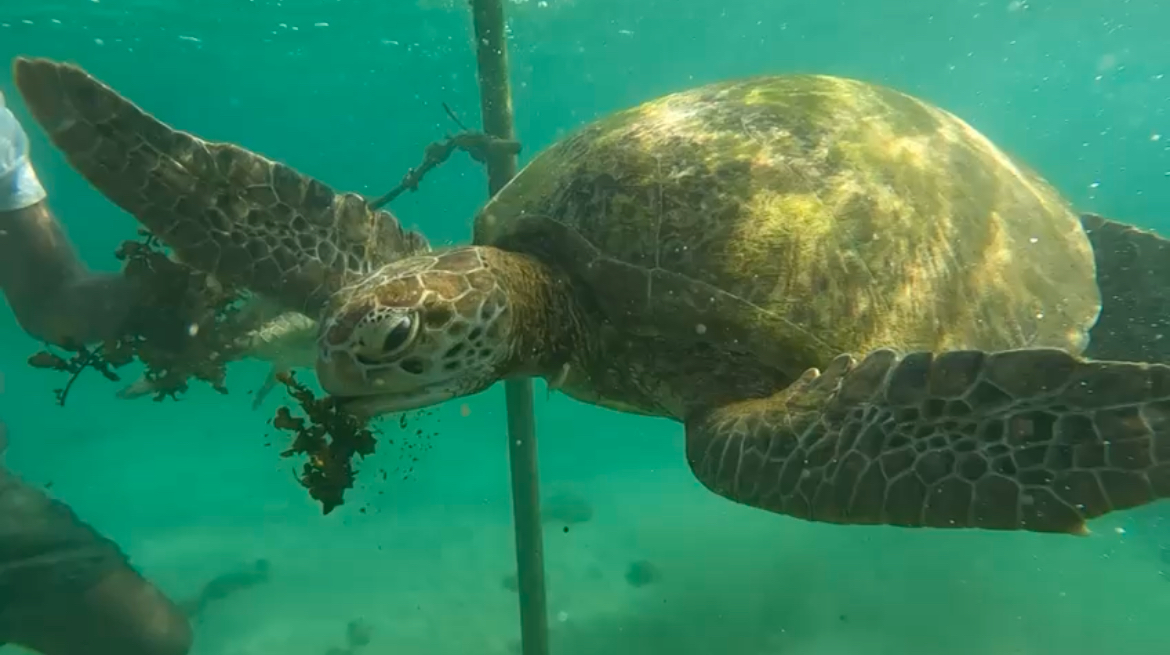
For many, the day started early at 6:30 am as we headed to the beach to snorkel with turtles and fish. It was a first-time experience for many, and a great way to start the day! We even had the chance to touch the turtles and feed them seaweed.

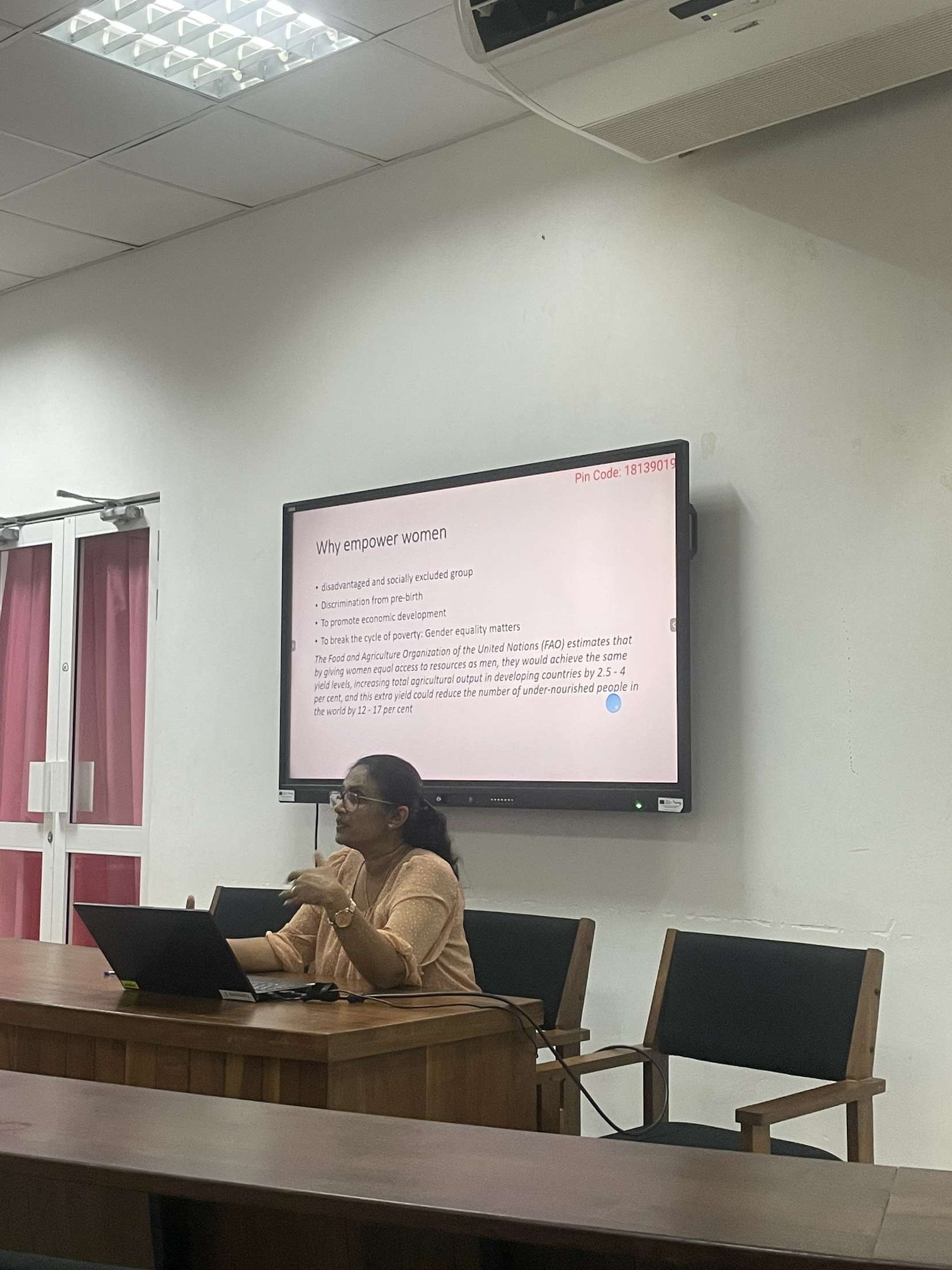
After we swam with the turtles, we attended lectures by Dr. Dushmanti Silva and Dr. Chandika, who shared valuable insights into the country’s challenges and recovery efforts.

Dr. Dushmanti Silva focused on women’s empowerment and the barriers they face in Sri Lanka. Many women are limited by cultural and social expectations, often depending on male family members for financial support. She explained that empowerment means giving women the freedom to make their own decisions, both in their personal lives and in the economy. Reducing discrimination and creating opportunities for women is essential for the country’s progress. Dr. Chandika’s lecture explored Sri Lanka’s economic recovery after the 2022 crisis. Years of overspending and mismanagement left the country in debt, but efforts are now focused on restructuring loans and improving government spending. He also emphasized the importance of diversifying industries to reduce reliance on vulnerable sectors like tourism and agriculture.

After lunch, we visited Institute for Development Strengths (INDECOS) in Matara. The organisation has been working in the Southern Province of Sri Lanka since 1991, and was created to support communities in need. They work irrespective of race, religion, caste and party politics. Also, they are registered as a Non profit organisation. Further, we learned about one of their current projects; Women Entrepreneurship Program (WEP), which started in 2005 to assist Tsunami affected women. The program has helped over 7600 women develop business skills and access loans, enabling them to build their own sustainable businesses.

Group 4 - Venera, Oliwia, Any, Kaja

Third day in Sri Lanka, January 8th

Third day in Sri Lanka, January 8th

After todays breakfast we headed to the University of Ruhuna where we had a second lecture about Sri Lanka’s economy and the economic crisis from 2019 to 2023. The lecturer, Dr Nandasiri Keembiyahetti, mentioned the large debts the country is in, especially to China, India and Japan which all have lended Sri Lanka money for various reasons. He also spoke of investments done by the Sri Lankan government with money loaned by other countries which went to non-income generating projects. This has in some cases, such as with China, led to Sri Lanka having to sell these projects back to the country which they lended the money from. Lastly, he summarized and differentiated between natural causes and man-made causes for the economic crisis. The natural causes included covid-19, global economic downturn and the Ukraine-Russia conflict. Man-made causes were structural problems in balance of payment, short vision of politicians, corruption and excessive money printing.

Later in the day we visited The Matara District Chamber of Commerce and Industry which is a vital institution dedicated to empowering businesses, fostering economic growth, and driving innovation across various sectors. It serves as a dynamic platform that brings together individuals, companies, and associations from diverse industries, including agriculture, manufacturing, services, finance, tourism, and construction. By offering membership benefits and specialized initiatives, the Chamber aims to strengthen the business ecosystem and facilitate sustainable development.

Through initiatives like the Export Development Hub, the Chamber supports businesses in entering and expanding into international markets. The Digital Marketing Hub empowers small and medium-sized enterprises (SMEs) to harness digital platforms for growth, while tourism development efforts promote local attractions, cultural events, and eco-tourism. International relations management and trade fairs enhance global partnerships and provide members with opportunities to showcase their products and services to a global audience.

As mentioned previously in Prof. K.H. Nandasiri lecture about economic crisis and its influence on different sectors of the economy in Sri Lanka, tourism is one of the most important income for Sri lankas economy.

The Matara District Chamber of Commerce and Industry wants to focus on tourism and how they can raise tourism in Matara. While there are many tourists in southern Sri Lanka during high season, many restaurants and hotels remain silent during off peek season. This affects large numbers of the southern population, as tuktuk drivers, restaurants, hotels and others are heavily dependent on tourism. The Matara District Chamber of commerce and industry, therefor wants to figure out ways to promote southern Sri Lanka during off peek seasons. They have among other things been wanting to promote different festivals for tourists. Recently they have made “international food and cultural festival”in 2023.

In addition, the Matara District Chamber of Commerce and Industry provides essential marketing support to its members, many of whom face challenges in accessing computers and digital tools. This support helps bridge the gap, enabling businesses to effectively promote and develop their products despite these limitations.

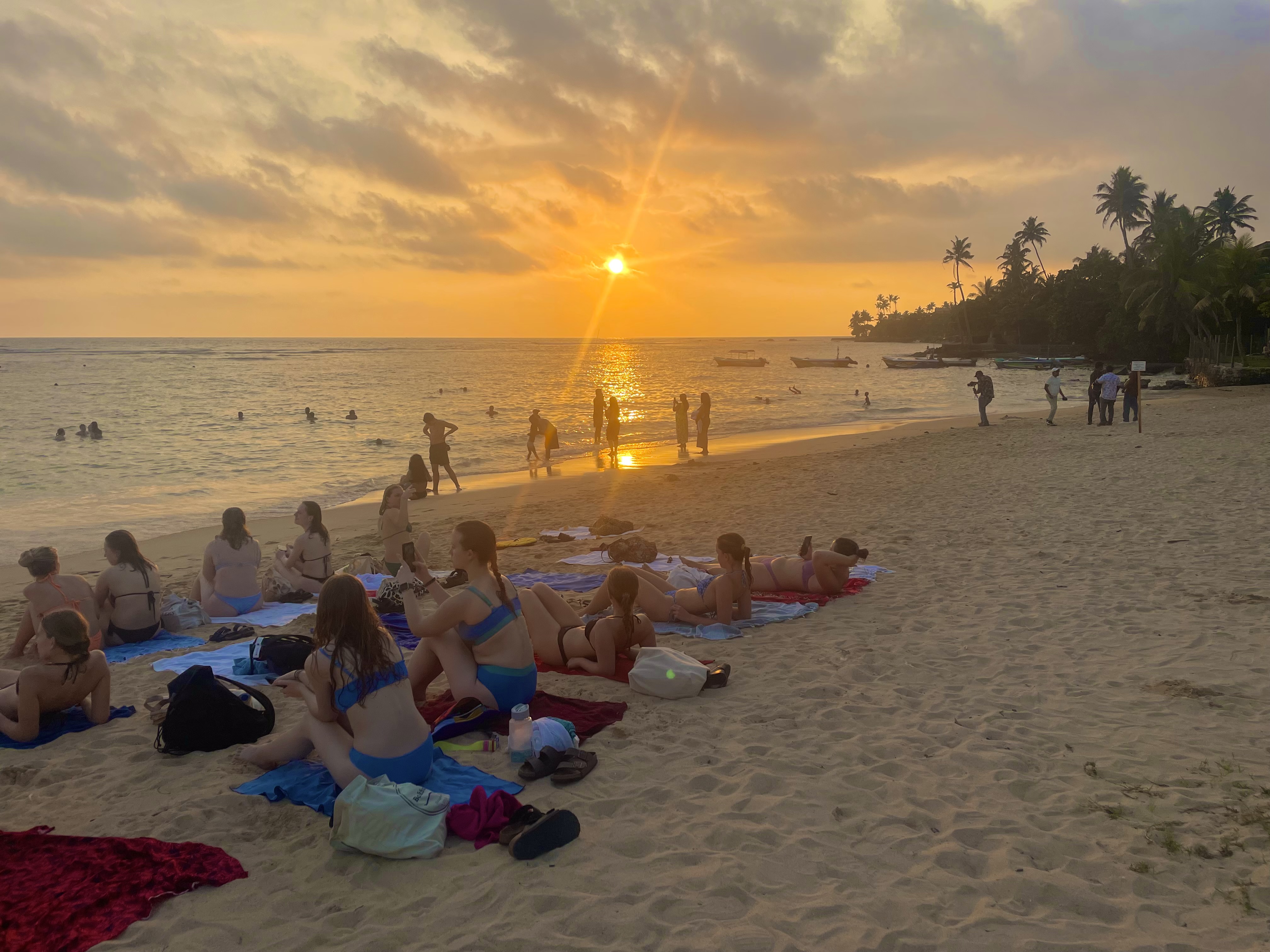
We ended the day with a long-awaited swim in the Indian ocean at Polhena beach where the water was warm and the sunset beautiful☀️

We are looking forward to the rest of the trip!

Group 3 - Martine, Rebecca, Signe, Kristin