January 18th, Day 13

January 18th, Day 13

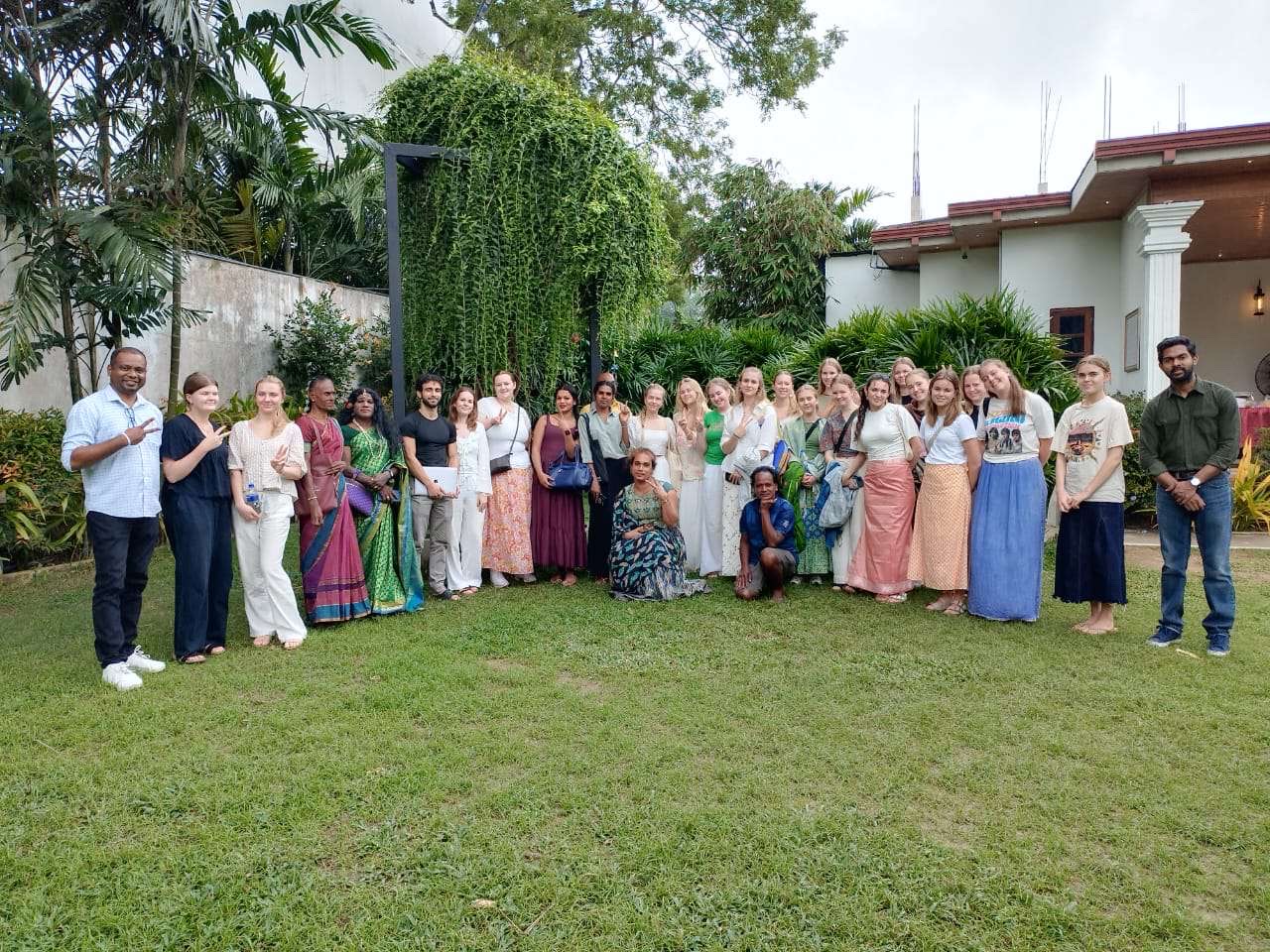
The first activity on today’s program was a lecture at The University of Jaffna, established in 1974. As today was a Saturday, there were not many students present on campus, but we got to meet some of them after our lecture and take pictures with them. Today's lecture was mainly about the economic crisis from a northern perspective but also touched upon politics, migration, and general information about the university. We were at the faculty of geography which teaches around 1200 students. As with the other universities we have visited, the number of girls attending (85%) is much higher than that of boys. The lack of interest in studies was explained by the prioritization and intrigue of making money. Another reason mentioned is the increase in drug abuse, which has become a significant problem in the last 10 years, especially among male students. When it comes to the economy in Jaffna, the lecturers mentioned an increase in tourism in the last 5 years. Several hotels have been built as a result, for example, the one we are staying at (J Hotels). Another interesting point made about the economy is how the second-generation migrants who moved from Sri Lanka to countries like Germany, Scotland, England, and so on do not send money back to Sri Lanka as the first-generation migrants did. The lecturers continued to discuss minority representation in politics as 95% of the people in Jaffna are Tamil speakers and therefore a part of the Tamil minority. Out of 225 MPs in the government, only 15 of them are Tamil. During the lecture, we had a nice snack, samosa and patties, alongside some typical sweet Sri Lankan tea.

After the lecture, we went back to our hotel to meet with the Angel Network - Jaffna Transgender Network - an LGBTQ+ rights activist community in Jaffna. They have been around for 5 years and are working with lgbtq+ rights and working to build community livelihoods for transgender, queer, and GNC (gender-non-confirming) individuals, and are mainly focusing on transgender rights. They are located in Jaffna but are also working with other Tamil-speaking places across the country. They started up in 2019 when 5-6 people had faced significant struggles at school etc. and wanted to prevent the same struggles for other trans people. The Jaffna society is very politically involved and it is a place for women and trans women who experience oppression in their daily lives. They are afraid to walk outside at night because they get hateful comments and get name-called, which truly damages their emotional well-being. The Angel Network organized the first pride parade in Jaffna, where many trans people, among others from the lgbtq+ community, from areas in Jaffna, and also from other parts of the country, marched. They all joined together for the same cause, and, over the years of this occurring, some of the police have become supportive. This annual event has opened up many more opportunities for people in the community and others to be able to feel safe and secure in their homes.

In the evening, we celebrated the Pongal festival (A harvest festival) with “Manudam” a local young leader’s association. Upon arriving, we were greeted by young children and adults, dressed in traditional clothing, and given paper flowers. We first took part in a ceremony where we boiled milk over a fire and danced around the pot. Following that ritual, we were ushered inside to watch both children and adults perform traditional dances, poems, and songs. We were then welcomed onstage to perform a song of our own, Ring Meg. During the performances, we were given a sweet pineapple-flavored drink and a sweet rice dish. After everyone at the ceremony shared a final dance together, we went outside to play some games. We played a game where one was to hit a pot with a stick while blindfolded, and a game where we were supposed to eat a whole bun without using our hands. The children also played musical chairs. After some group photos, we said our final farewells to the Manudam group. This was a very fun afternoon where we got to know and meet many children who showed us how to celebrate Pongal.

Written by: Lorelei, Andrea, Julia, and Kaja
Third day in Sri Lanka, January 8th

Third day in Sri Lanka, January 8th

After todays breakfast we headed to the University of Ruhuna where we had a second lecture about Sri Lanka’s economy and the economic crisis from 2019 to 2023. The lecturer, Dr Nandasiri Keembiyahetti, mentioned the large debts the country is in, especially to China, India and Japan which all have lended Sri Lanka money for various reasons. He also spoke of investments done by the Sri Lankan government with money loaned by other countries which went to non-income generating projects. This has in some cases, such as with China, led to Sri Lanka having to sell these projects back to the country which they lended the money from. Lastly, he summarized and differentiated between natural causes and man-made causes for the economic crisis. The natural causes included covid-19, global economic downturn and the Ukraine-Russia conflict. Man-made causes were structural problems in balance of payment, short vision of politicians, corruption and excessive money printing.

Later in the day we visited The Matara District Chamber of Commerce and Industry which is a vital institution dedicated to empowering businesses, fostering economic growth, and driving innovation across various sectors. It serves as a dynamic platform that brings together individuals, companies, and associations from diverse industries, including agriculture, manufacturing, services, finance, tourism, and construction. By offering membership benefits and specialized initiatives, the Chamber aims to strengthen the business ecosystem and facilitate sustainable development.

Through initiatives like the Export Development Hub, the Chamber supports businesses in entering and expanding into international markets. The Digital Marketing Hub empowers small and medium-sized enterprises (SMEs) to harness digital platforms for growth, while tourism development efforts promote local attractions, cultural events, and eco-tourism. International relations management and trade fairs enhance global partnerships and provide members with opportunities to showcase their products and services to a global audience.

As mentioned previously in Prof. K.H. Nandasiri lecture about economic crisis and its influence on different sectors of the economy in Sri Lanka, tourism is one of the most important income for Sri lankas economy.

The Matara District Chamber of Commerce and Industry wants to focus on tourism and how they can raise tourism in Matara. While there are many tourists in southern Sri Lanka during high season, many restaurants and hotels remain silent during off peek season. This affects large numbers of the southern population, as tuktuk drivers, restaurants, hotels and others are heavily dependent on tourism. The Matara District Chamber of commerce and industry, therefor wants to figure out ways to promote southern Sri Lanka during off peek seasons. They have among other things been wanting to promote different festivals for tourists. Recently they have made “international food and cultural festival”in 2023.

In addition, the Matara District Chamber of Commerce and Industry provides essential marketing support to its members, many of whom face challenges in accessing computers and digital tools. This support helps bridge the gap, enabling businesses to effectively promote and develop their products despite these limitations.

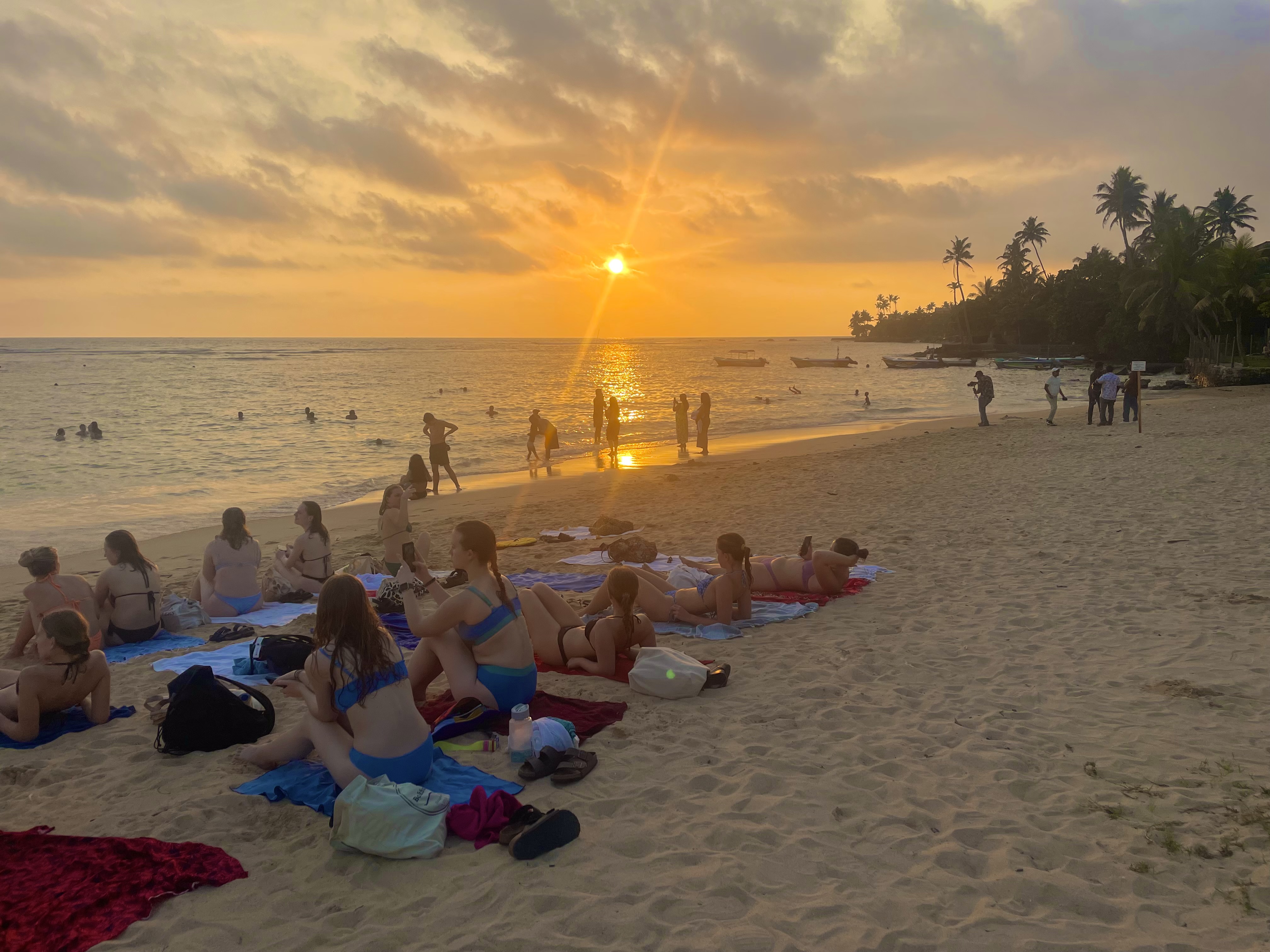
We ended the day with a long-awaited swim in the Indian ocean at Polhena beach where the water was warm and the sunset beautiful☀️

We are looking forward to the rest of the trip!

Group 3 - Martine, Rebecca, Signe, Kristin

Second day in Sri Lanka, January 7th

Today, january 7th, we left at 9 am to spend a few hours in the university of Ruhuna, where we learned about the economy of Sri Lanka. The lecture was held by Dr. Sumanarathna, where he explained that Sri Lanka had an economic crisis and not a financial crisis. The normal salary to make in a year is approximately 50 thousand kroner, which is 1.3 million rupi’s.

Later we drove about one hour to visit a fabric factory called Miami Exports, located in Ranna. We learned a lot of interesting things about the process of making clothes. When the fabric arrives at the factory, it has to be pressed so it is nice and without wrinkles, then it is placed in shelves where they have different places for different colors and the fabric type. The fabric has to go through different stages before it can be sown into clothes. After the long process, it goes through different stations where different people make different parts of the product, some fix the waistband, others work on the stitching around the neck.

We also learned that there are approximately 1200 employees, where the age goes from 18 all the way up to 50. The worker here typically work 10 hours a day. The factory have two different stations where the buildings are packed with workers. When walking inside the buildings, we could se that the majority of the workers were women.

Group 2 - Karoline, Jenni, Leah, Emma