January 14th, Day 9

January 14th, Day 9

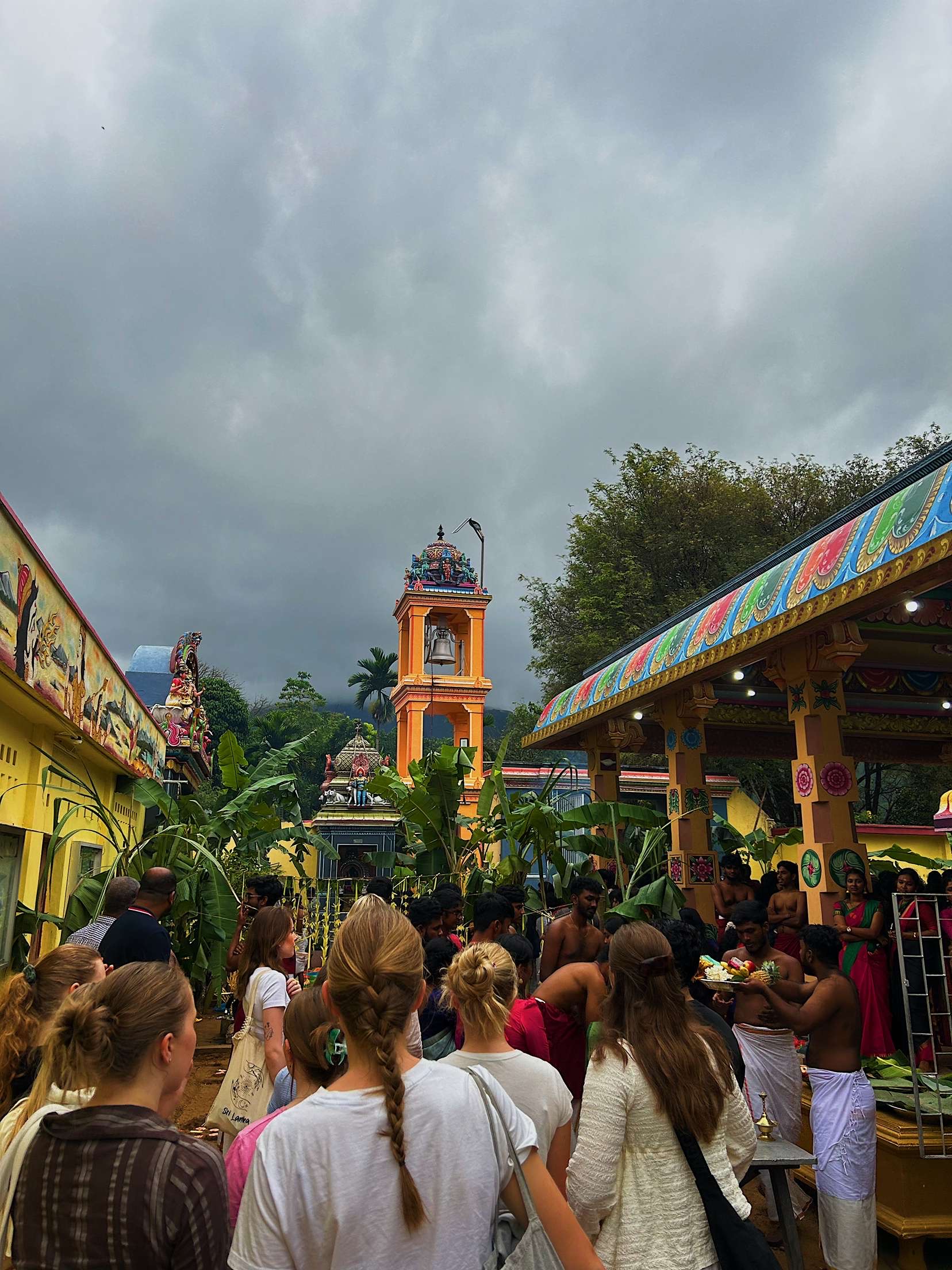
Today we left at 07.30, to go visit and celebrate Tamil Thaipongala day with local students and teachers. We went to the Kurinchijumaran temple, which is a temple at university grounds, to celebrate the festival. The festival is called Pongal, which is a Tamil holiday in which they make sacrifices to the sun. The main purpose is therefore giving the first harvest of the year to the gods. Additionally, in this celebration, they pay full respect to the cows. Pongal is very important to the Tamil people who are a minority in Sri Lanka. Even though it is considered a Hindu holiday, many Tamil people of other religions also join the festivities. Students and teachers of the university were celebrating together wearing traditional saris.

During our visit, it started to rain. However, even though it was raining, the spirits were high amongst the students. The temple we visited was beautiful and filled with colorful decorations and paintings of Hindu gods. During the celebration, it was a ritual, where many sacrificed different items such as fruits, flowers etc to the gods. There was also a distinct smell of incense which they use. Similar to the temple we visited yesterday, we had to go barefoot. Later on, we returned to the hotel for a late breakfast, with toast and scrambled eggs. We then had some time to relax and explore the city if we wished to do so, although with the full program we’ve had since our arrival, many students decided to stay at the hotel to relax. Some of us decided to eat lunch at the hotel, where we were served some local foods. Now we are soon ready to head to Anuradhapura, but first we have to pack our bags!

January 13th, day 8

January 13th, day 8

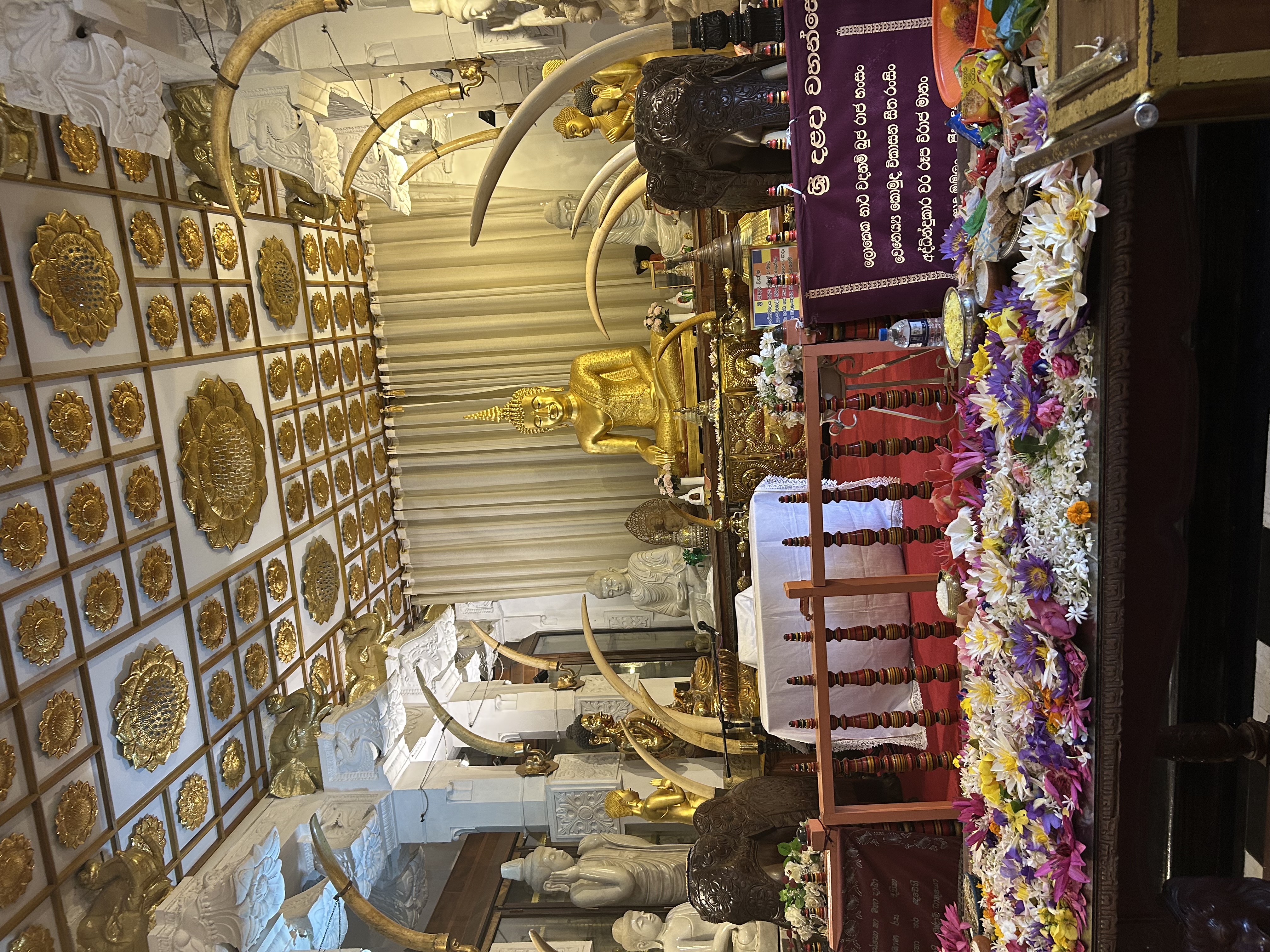
Today we started the day with breakfast at 8 am, and we were going to the Dalada Maligava tooth relic temple here in Kandy. Here we got to experience the Duruthu Full Moon Poyaday with the locals. The reason the temple has the name it has is because it is said that the tooth of Buddha is located inside the temple. The group were also wearing white so symbolize purity and walked barefoot as a sign of respect. We got to visit different rooms in the temple, and see how the locals were celebrating the holiday. They were also bringing flowers and gifts to honor Buddha. In one of the rooms it was a taxidermy elephant, because it had served the temple for 40 years, and was seen as a royal elephant. 🐘🪷

Later we walked to a vegetable market where they sold different varieties of vegetables and fruit. After that the we free to do as we wanted. 🛺

We ended the day with a dinner together as a group, and had a quiz about Sri Lanka, sports, history, politics and geography. 🪫

Seventh day in Sri Lanka, January 12th

Seventh day in Sri Lanka, January 12th

Due to some traffic issues we arrived at the university of Peradeniya Department of Geography at 10.15 am to greet Dr. Arularasi Balakrishnan. Her lecture begun with an overview of the social landscape in Sri Lanka where she noted that Sri Lanka is ranked 78th on the Human Development Index. More so she went over the traditional settlement setup- which includes a river, a tank system and a paddy. Her discussion primarily focused on the causes, impacts and future of the economic crisis in Sri Lanka. Dr. Arularasi Balakrishnan gave some of the causes as follows: unsustainable debt accumulation, decline in foreign reserves, policy mistes, structural economic issues, external shocks and more. Later she went on to explain how these causes contributed to inflation and a foreign reserve crisis, including a comprehensive analysis of the political impacts of economic crisis. Lastly, she informed us about the response and recovery measures to taken to resolve the economic crisis. She left us to ponder the question of what Sri Lanka's economic future will be

After our lecture we went to an NGO called Women Development Center and their store called Sthree Shop-Social Enterprise. While we were there we got an introduction from the women working there about what their organization is working towards and for whom. The main goals of the organization is to support and equip women-led community groups with the knowledge, resources and skills necessary for them to be able to challenge the social injustices they face. gender-based violence. They were invested in helping women, children and disabled people with their (3/4) facilities around the city Kandy and with their trainers being well-trained in caring and helping the disabled. After their introduction they served us lunch, a traditional Sri Lankan meal consisting of dahl, rice, papadam, mango curry and more. After a while we got to explore their store that contained many of their hand-made items of clothing, accessories and more, including cultural items.

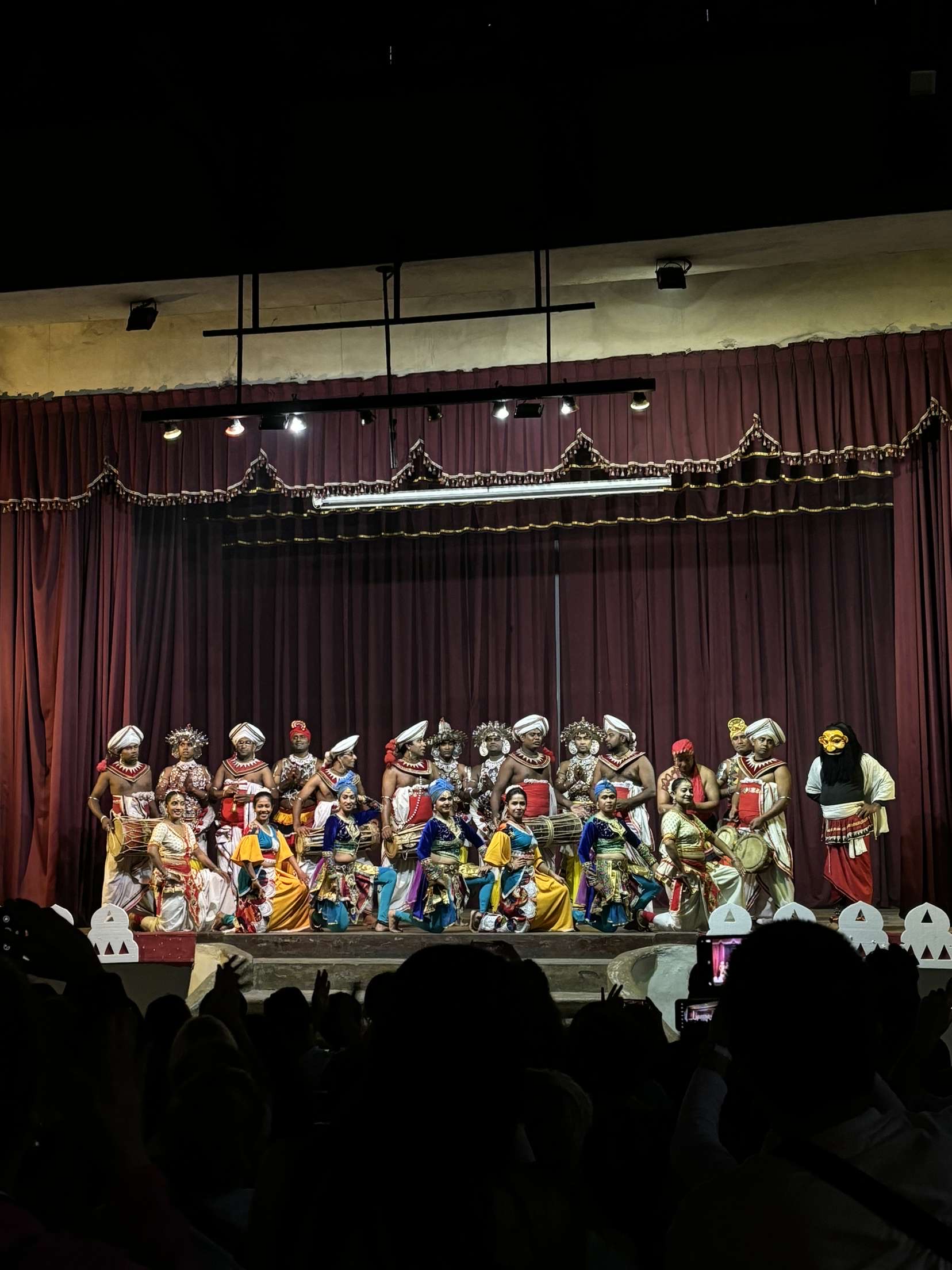
In the evening we went to a cultural dance show at the Kandyan Cultural Center. There we were able to see many different types of dances. For example, the Mayuranatum (peacock-dance) and the Ginisisila (fire-dance). In addition to the dancing were both drums and traditional clothing and masks. The performers were dancing with fire, balancing plates and doing acrobatics. It was a great cultural experience for us and a good way to end today's program.

Group 1 - Andrea, Julia, Kaja, Lorelei

Sixth day in Sri Lanka, January 11th

Sixth day in Sri Lanka, January 11th

Today we had our first travel day here in Sri Lanka. After breakfast at 8am, we got in the bus and headed for Kandy, where we are spending the next four days. The trip was approximately 7 hours long, but as we drove towards Kandy, there were a beautiful scenery the whole way there, which made the trip feel shorter than it was. It was also the first day since we got here that we were able to relax for several hours, which was much needed after a hectic week in Matara.

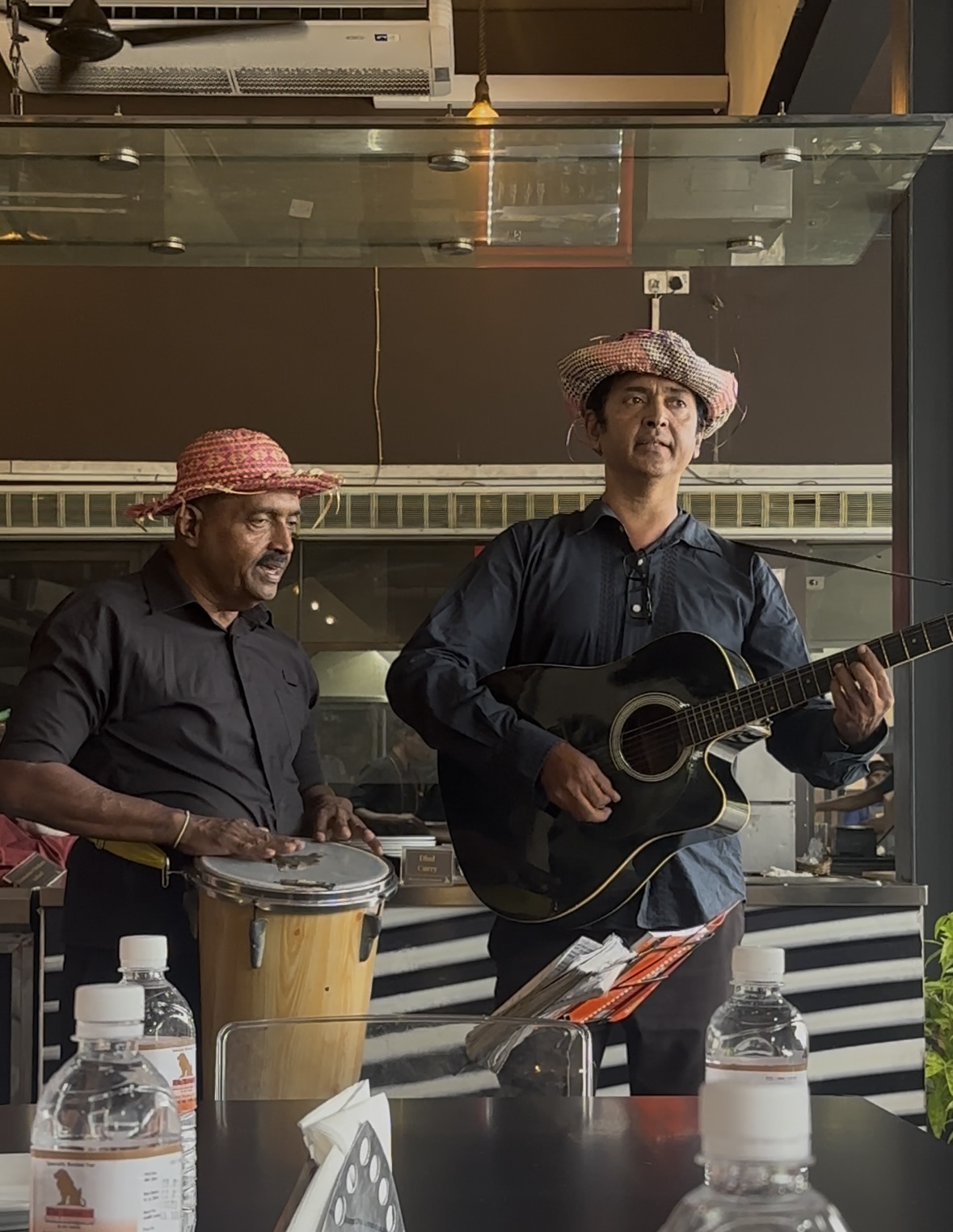
We ended up stopping for lunch at the Leone cafe where we got a verity of sandwiches and fries. There were also musicians playing for us when we ate, which was a fun experience.

When we closed in on Kandy, we were able to learn a few facts about the city of Kandy. This included that Kandy was the only city during colonial times in Sri Lanka, that were not controlled by the British settlers. We also learned that Kandy is the last capital of Sri Lanka.

When we arrived at the hotel, there were now time to relax a little bit more, before dinner. Today, most of the class chose to stay at the hotel for dinner, which had delicious food.

We are excited for the next few days here in Kandy.

Group 6: Gina, Azin, Kagnew og Siri

Fifth day in Sri Lanka, January 10th

Fifth day in Sri Lanka, January 10th

Today we had our last day in the Matara district. The bus left at 8:40 for our last two lectures at the University of Ruhuna. Firstly we had a statistic lecture with local students held by Dr. Nisantha Kurukulasooriya. He lectured about the interference between statistics and social siences, as well as how collection of random data adresses issues in studies regarding the social sciences. The second part of the lecture was spent interacting with the local students. We shared experiences and learned about their everyday school life, families and ambitions. Then there were time for a morning snack consisting of bananas, pancakes with coconut sugar and sandwiches with onion, as well as coffee and tea.

After tea-time we had our last lecture at the university held by Dr. Indi Akutugoda. She is the head of the department of Public policy, and held her lecture about Sri Lanka’s socio-political changes and challenges. Here we learned shortly about the colonial history of Sri Lanka, as well as their governmental and administrative systems. Then she moved on to challenges and disasters Sri Lanka have faced with throughout the deacades. Including the tsunami on December 26th 2004 which left many thousands deceased or homeless,as well as the civil war which ended in 2009. The Civil war were between the Sri Lankan government and the Liberation Tigers of Tamil Eelam, and 30 years after it’s beginning did the government end the war victorious. Others things she discussed was the Easter sunday terrorist attacks in 2019, Covid-19 pandemic in 2020-2021 and the bankruptcy in 2022.

However, despite these struggles Sri Lanka has made multiple successes over the past two years. The 22nd amendment were introduced to the constitution and welfare have increased. New provisions of fuel, gas, medicine and essential food items have eased peoples lives. In addition were the economy managed by restructuring debt with companies such as the World Bank. This restructuring resulted in the economic bankruptcy ending in 2024.

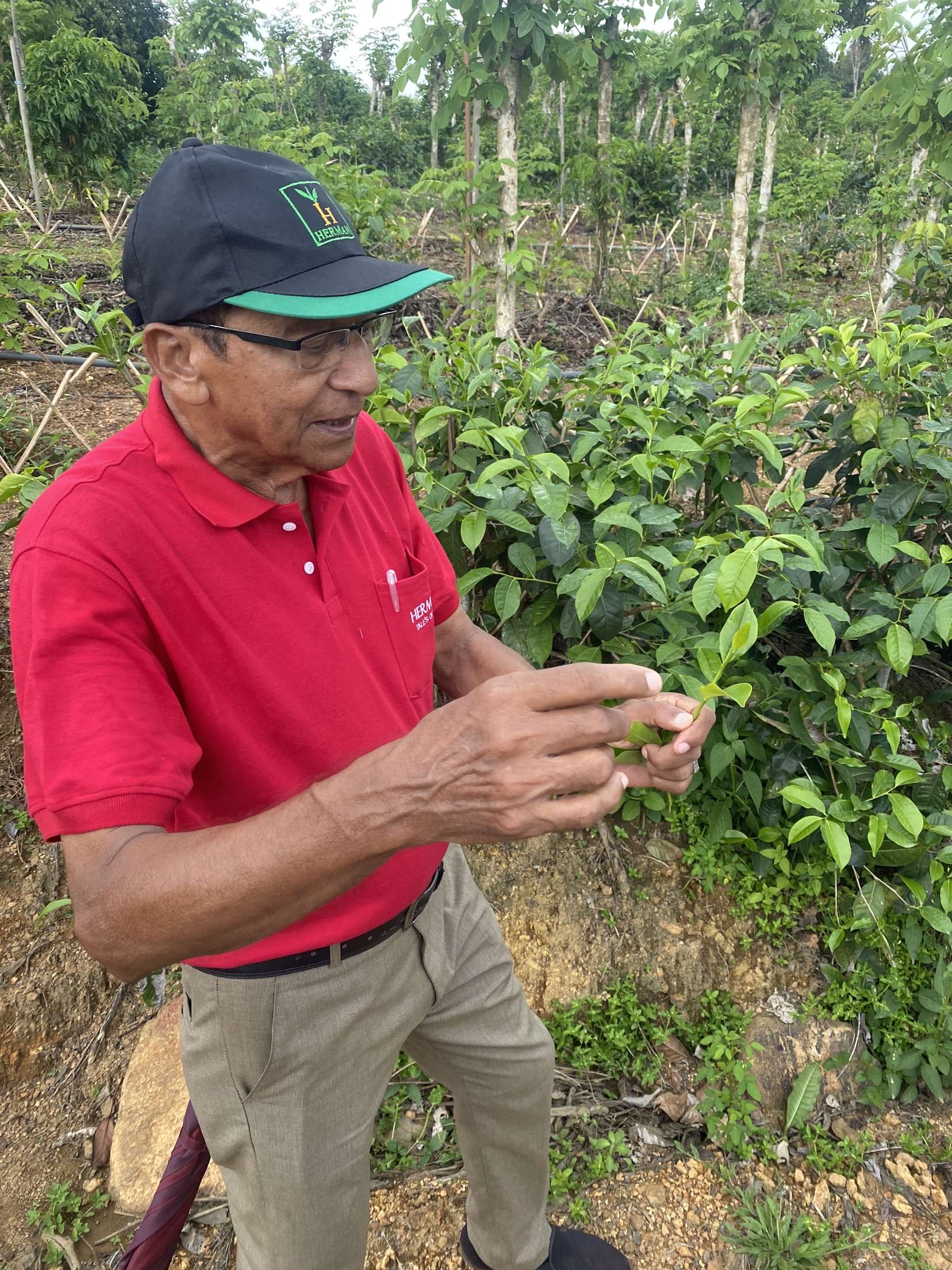
After the lecture we headed to lunch at the university, before taking the bus to the White Virgin tea factory. At the factory we first got a tour of the grounds where they grow the plants needed to make the tea. We got to taste their Sapphire Oolong tea, which is only available at this place in the whole world. Afterwards we continued to the tea factory. Inside the factory our guide showed us the process from tea-leaves plucked in their grounds, into ready tea sold by the box. Then we got an opportunity to taste all of their teas and buy from their selection.

To conclude our last night in Matara, we drove to Unawatuna to eat dinner. We have had an amazing time exploring Matara and are very much looking forward to the next stop on our journey, which is Kandy!

Group 5 - Anja, Lea, Katrine & Ada

Fourth day in Sri Lanka, January 9th

Fourth day in Sri Lanka, January 9th

![enter image description here](https://fcsl2025.fohss.lk/content/images/20250109225022-2222.JPG)

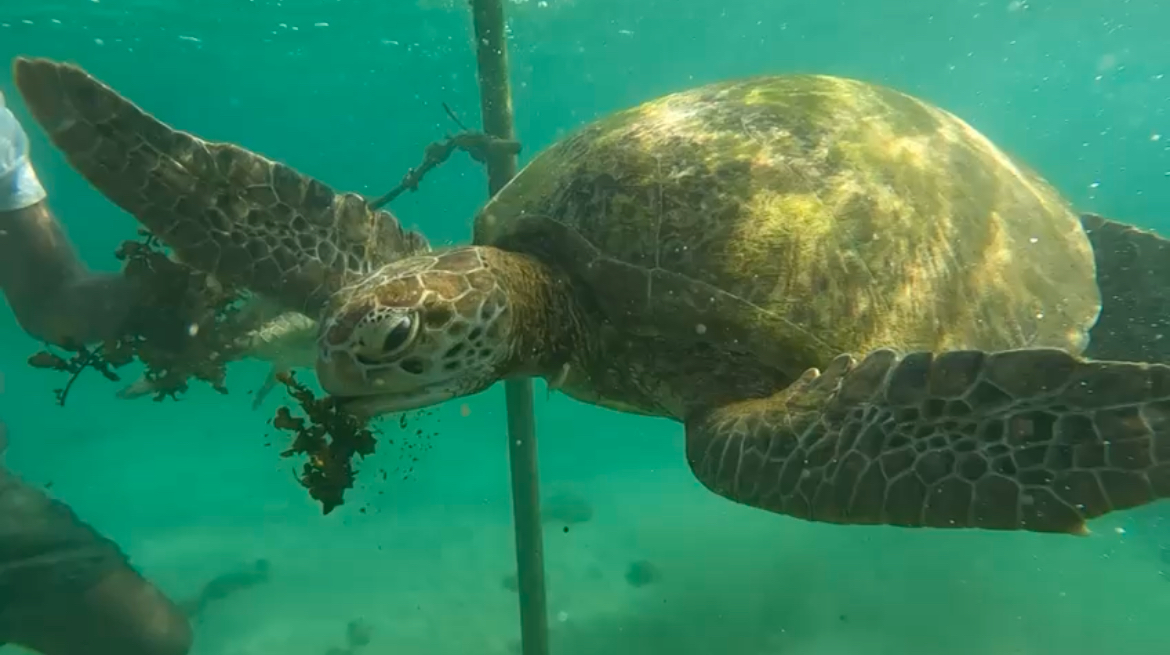
For many, the day started early at 6:30 am as we headed to the beach to snorkel with turtles and fish. It was a first-time experience for many, and a great way to start the day! We even had the chance to touch the turtles and feed them seaweed.

After we swam with the turtles, we attended lectures by Dr. Dushmanti Silva and Dr. Chandika, who shared valuable insights into the country’s challenges and recovery efforts.

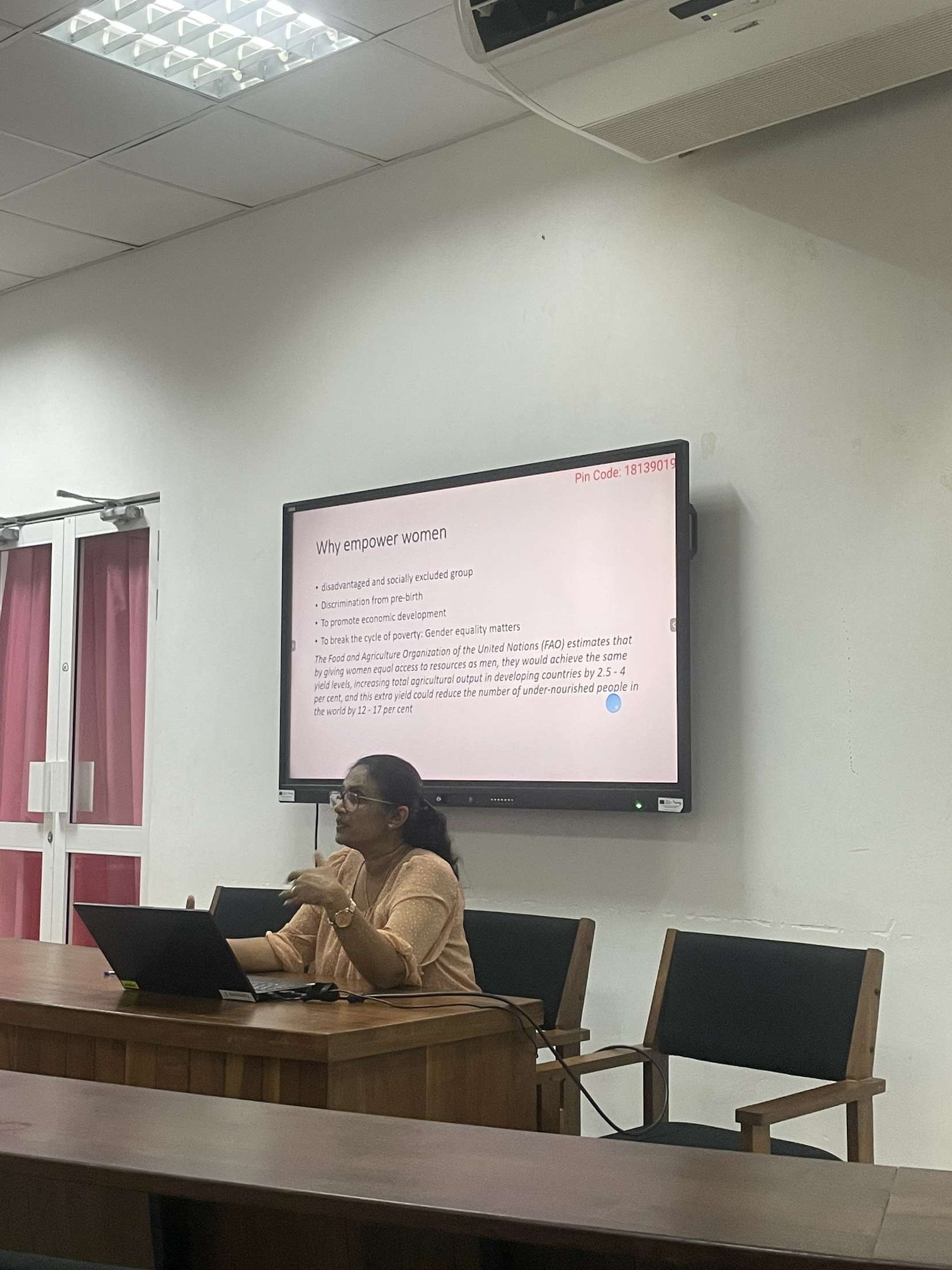
Dr. Dushmanti Silva focused on women’s empowerment and the barriers they face in Sri Lanka. Many women are limited by cultural and social expectations, often depending on male family members for financial support. She explained that empowerment means giving women the freedom to make their own decisions, both in their personal lives and in the economy. Reducing discrimination and creating opportunities for women is essential for the country’s progress. Dr. Chandika’s lecture explored Sri Lanka’s economic recovery after the 2022 crisis. Years of overspending and mismanagement left the country in debt, but efforts are now focused on restructuring loans and improving government spending. He also emphasized the importance of diversifying industries to reduce reliance on vulnerable sectors like tourism and agriculture.

After lunch, we visited Institute for Development Strengths (INDECOS) in Matara. The organisation has been working in the Southern Province of Sri Lanka since 1991, and was created to support communities in need. They work irrespective of race, religion, caste and party politics. Also, they are registered as a Non profit organisation. Further, we learned about one of their current projects; Women Entrepreneurship Program (WEP), which started in 2005 to assist Tsunami affected women. The program has helped over 7600 women develop business skills and access loans, enabling them to build their own sustainable businesses.

Group 4 - Venera, Oliwia, Any, Kaja

Third day in Sri Lanka, January 8th

Third day in Sri Lanka, January 8th

After todays breakfast we headed to the University of Ruhuna where we had a second lecture about Sri Lanka’s economy and the economic crisis from 2019 to 2023. The lecturer, Dr Nandasiri Keembiyahetti, mentioned the large debts the country is in, especially to China, India and Japan which all have lended Sri Lanka money for various reasons. He also spoke of investments done by the Sri Lankan government with money loaned by other countries which went to non-income generating projects. This has in some cases, such as with China, led to Sri Lanka having to sell these projects back to the country which they lended the money from. Lastly, he summarized and differentiated between natural causes and man-made causes for the economic crisis. The natural causes included covid-19, global economic downturn and the Ukraine-Russia conflict. Man-made causes were structural problems in balance of payment, short vision of politicians, corruption and excessive money printing.

Later in the day we visited The Matara District Chamber of Commerce and Industry which is a vital institution dedicated to empowering businesses, fostering economic growth, and driving innovation across various sectors. It serves as a dynamic platform that brings together individuals, companies, and associations from diverse industries, including agriculture, manufacturing, services, finance, tourism, and construction. By offering membership benefits and specialized initiatives, the Chamber aims to strengthen the business ecosystem and facilitate sustainable development.

Through initiatives like the Export Development Hub, the Chamber supports businesses in entering and expanding into international markets. The Digital Marketing Hub empowers small and medium-sized enterprises (SMEs) to harness digital platforms for growth, while tourism development efforts promote local attractions, cultural events, and eco-tourism. International relations management and trade fairs enhance global partnerships and provide members with opportunities to showcase their products and services to a global audience.

As mentioned previously in Prof. K.H. Nandasiri lecture about economic crisis and its influence on different sectors of the economy in Sri Lanka, tourism is one of the most important income for Sri lankas economy.

The Matara District Chamber of Commerce and Industry wants to focus on tourism and how they can raise tourism in Matara. While there are many tourists in southern Sri Lanka during high season, many restaurants and hotels remain silent during off peek season. This affects large numbers of the southern population, as tuktuk drivers, restaurants, hotels and others are heavily dependent on tourism. The Matara District Chamber of commerce and industry, therefor wants to figure out ways to promote southern Sri Lanka during off peek seasons. They have among other things been wanting to promote different festivals for tourists. Recently they have made “international food and cultural festival”in 2023.

In addition, the Matara District Chamber of Commerce and Industry provides essential marketing support to its members, many of whom face challenges in accessing computers and digital tools. This support helps bridge the gap, enabling businesses to effectively promote and develop their products despite these limitations.

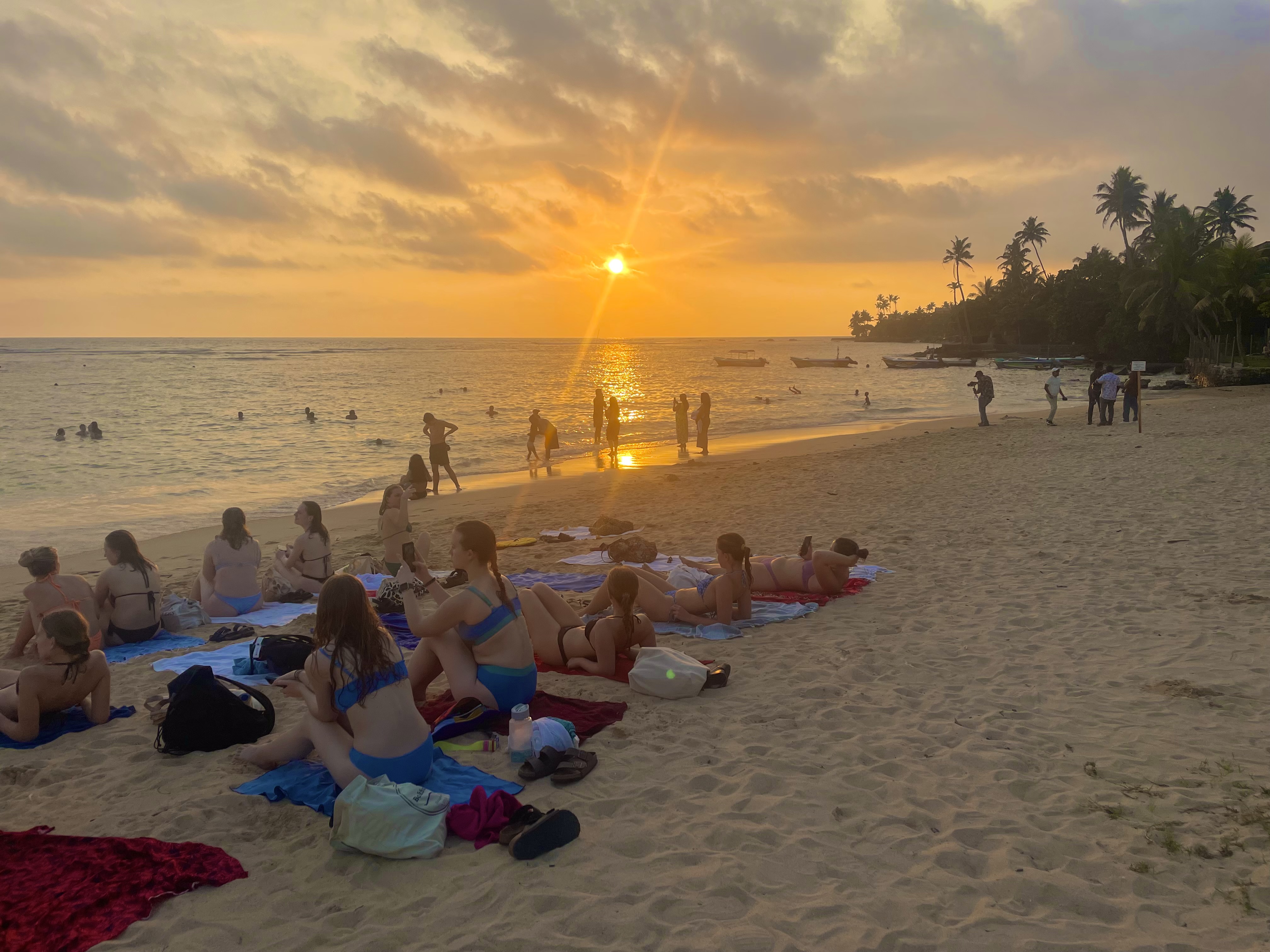
We ended the day with a long-awaited swim in the Indian ocean at Polhena beach where the water was warm and the sunset beautiful☀️

We are looking forward to the rest of the trip!

Group 3 - Martine, Rebecca, Signe, Kristin
Second day in Sri Lanka, January 7th

Today, january 7th, we left at 9 am to spend a few hours in the university of Ruhuna, where we learned about the economy of Sri Lanka. The lecture was held by Dr. Sumanarathna, where he explained that Sri Lanka had an economic crisis and not a financial crisis. The normal salary to make in a year is approximately 50 thousand kroner, which is 1.3 million rupi’s.

Later we drove about one hour to visit a fabric factory called Miami Exports, located in Ranna. We learned a lot of interesting things about the process of making clothes. When the fabric arrives at the factory, it has to be pressed so it is nice and without wrinkles, then it is placed in shelves where they have different places for different colors and the fabric type. The fabric has to go through different stages before it can be sown into clothes. After the long process, it goes through different stations where different people make different parts of the product, some fix the waistband, others work on the stitching around the neck.

We also learned that there are approximately 1200 employees, where the age goes from 18 all the way up to 50. The worker here typically work 10 hours a day. The factory have two different stations where the buildings are packed with workers. When walking inside the buildings, we could se that the majority of the workers were women.

Group 2 - Karoline, Jenni, Leah, Emma

First day in Sri Lanka, January 6th

We left the hotel at 9 am to visit the University of Rahuna, a partner school to UIA. Although the structure itself was old, it was upkept with agricultural features such as the rock formations, trees, flowers, and lakes. We were welcomed by some from the school’s administration, including the vice chancellor, before we were taken into one of their conference rooms. We got to ask questions about the university life, including the gender imbalance and living accommodations. Surprisingly, we learned that the ratio was 80%-20% where the women represent the 80%. Similar to Norway, many students live in dormitories on the campus, and eat subsidized food in the cafeteria.

This was our first day the university of Ruhuna, were we got a little tour of the buildings and got to meet some of the professors and staff. Our first meal at the university was a traditional Sri Lankan morning snack and tea in the administration cafeteria. After this, we went on a short bus trip to the most southern tip of the island, where we also got to see the rebuild after the 2004 tsunami. On our way back to the university, Ajith gave us some knowledge about the domestication of elephants in Sri Lanka.

This would later be brought up in the lecture by professor Kumara when he discussed the ecological situation of Sri Lanka. Professor Kamara highlighted the vast biodiversity on the island and the subsequent geopolitical situations. As it turns out, the biodiversity contributes to the tourism industry due to bird watching opportunities.

Group 1 - Andrea, Julia, Kaja and Lorelei